|
Cold Lake Veterinary Clinic - Diabetes Information
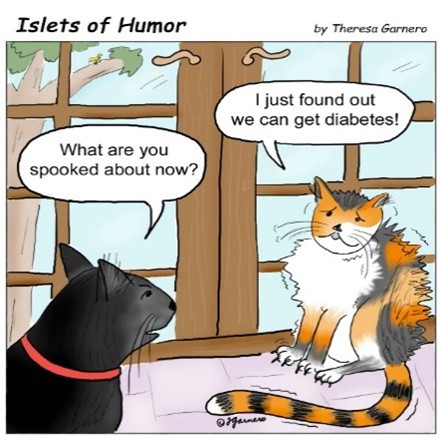
My Pet Has Diabetes… Now What?
Diabetes can be very stressful but can be managed, and we are here to help! Please let us know if you have any questions
or concerns about your pet. Our wonderful, informed technicians can also have a meeting with you to go over at-home insulin injections,
diet information and more.
What does it mean?
The pancreas is an organ within the abdomen. The two main functions of the pancreas are to produce enzymes that are involved with digestion
and hormones that are primarily involved with the utilization and metabolism of sugar. Insulin is one of these hormones.
Diabetes mellitus is caused by a deficiency of insulin that results in the inability of the body’s tissues and organs to properly utilize glucose,
if this happens high blood sugar levels develop.
Why does my pet have this?
Diabetes Mellitus usually affects middle-age to older cats and dogs. The causes can include infectious disease, genetic, immune system abnormalities
that cause destruction of the hormone producing regions within the pancreas, pancreatitis, medications, as well as other hormonal diseases.
In cats, diabetes can result from their inability to effectively process carbohydrates. Foods that are too high in carbohydrates can overwhelm the pancreas,
thus leading to diabetes.
Is it lifelong?
In dogs, diabetes mellitus is commonly a permanent disorder, whereas in cats a rare short-term (transient) and reversible form of diabetes mellitus exists.
This can be a serious life-threatening disease if left untreated, but most diabetic animals that are diagnosed, treated properly and that respond well to
treatment can live a normal (or near-normal) life span with a good-quality of life.
What is the treatment for diabetes?
Insulin treatment is required in all dogs and most cats. There are many different types of insulin with different durations of effect. Your veterinarian will
recommend the most appropriate type for your animal. Most animals require two insulin injections daily, 12 hours apart, with a meal. Most owners
become very efficient and pets become very tolerant.
The main goal of a diabetic animal is to minimize blood glucose fluctuations, eliminate the symptoms that are associated with high blood glucose levels
(excessive drinking, urination, and change in weight), and improve the quality of the pet’s life.
Treatment is very individualized to each patient, as no pet is the same! The severity of the symptoms, the underlying cause, the type of diabetes
and secondary diseases that may be involved are all considered when deciding a treatment plan.
Keeping a daily log of your observations and the dosage and timing of the insulin injections can be very helpful. This can also help you and your family
keep track of the medications. Be sure to give all prescribed medications as directed by your veterinarian. These medications are essential in regulating
blood sugar levels as well as improving the quality of your pet’s life.
For cats, we can also use an oral medication called Senvelgo. This helps to regulate the blood sugar once daily and requires different monitoring than insulin.
What do we need to watch for?
Monitoring for signs of low sugar levels (hypoglycemia) is very important.
Too much insulin can cause blood sugar levels to go too low. This is what you will notice with this:
- Disorientation
- Sluggishness
- Seizures
- Coma
*If you notice your pet seems disoriented or weak but is still responsive, offer food immediately.
*If your pet is unconscious or will not eat, apply a sugary solution like corn syrup or maple syrup to the gums.
**In both these cases call your veterinarian immediately**
Diabetic Ketoacidosis (DKA) is the most serious complication and considered a medical emergency. Symptoms are lethargy (sluggish),
have little to no appetite, and generally seem profoundly ill. Diagnostic testing by a veterinarian is necessary to identify ketoacidosis,
and intensive care treatment is generally necessary.
* As insulin requirements of a diabetic dog or cat can change over time, it is very important to keep all recommended follow-up appointments
and lab tests with your veterinarian to monitor blood sugar levels. *
How do we give insulin?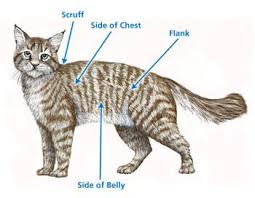
Insulin must be kept in a cool dry place (refrigerator). The insulin bottle should be mixed carefully before drawing up the dose.
As each treatment is individualized, so is the type of insulin. There are a variety of insulin brands that each have specific directions
before using (for example, refrigerating, shaking vs rolling the vial, etc). Depending on the insulin we can damage and/or inactivate
the insulin if not handled properly.
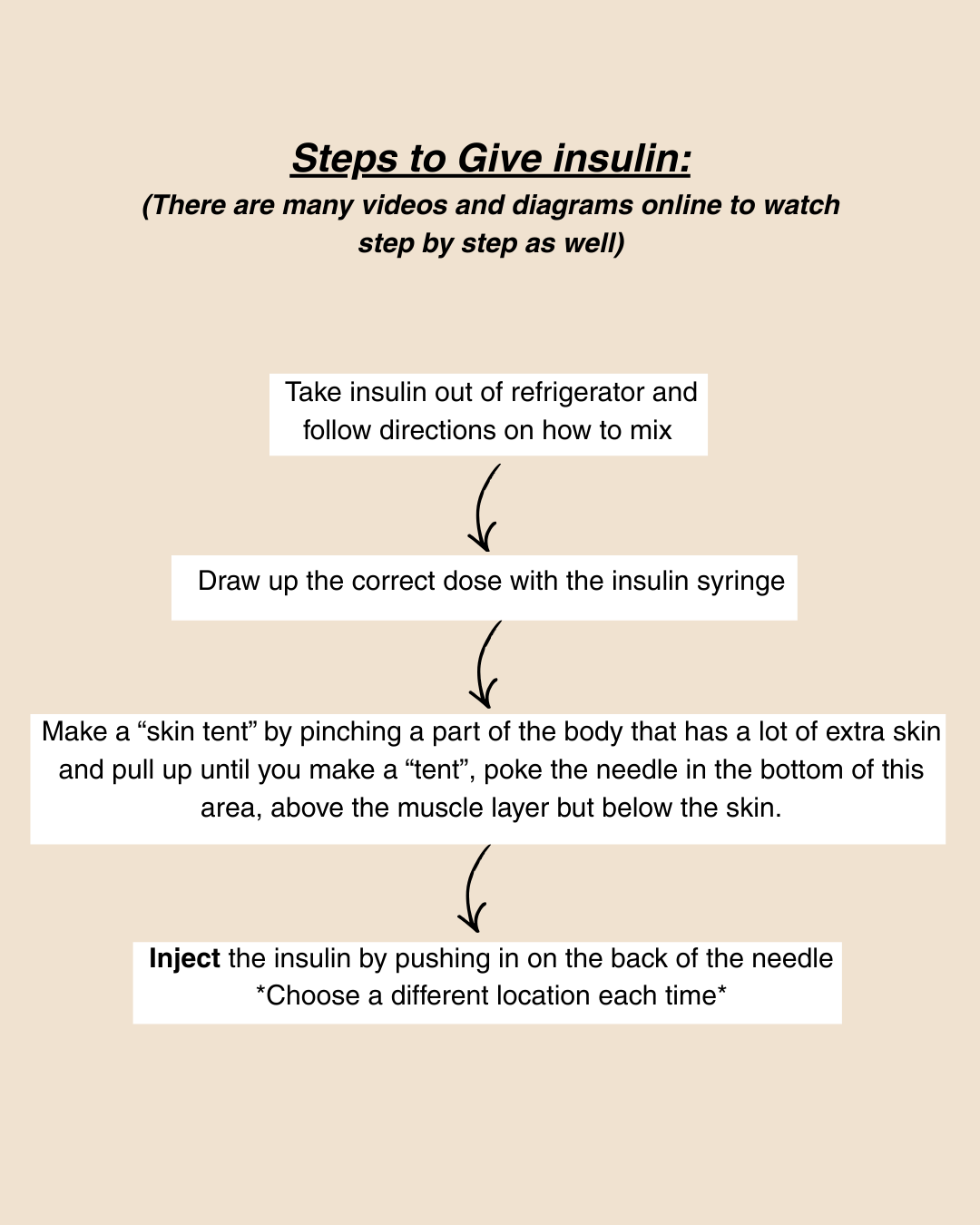
Where do we get the syringes and insulin?
At the veterinary clinic or pharmacy. Call us a couple days before you need a refill and we will gladly order them in for you if they’re not in stock.
It is VERY important you get the right size syringe as there are a couple kinds out there, and your dose is dependent on the syringe type you
were given. There are options that come in a pen + needle form that can be prescribed by your veterinarian.
Please call veterinarian before changing your pets insulin dose!
Where do we dispose of the syringes?
The syringes are only for one use, after they are used place them in the needle safe container (that in some cases they come with).
Once the container is full, you can bring it back to the clinic, or some pharmacies to dispose of. (If using the pen option, the detachable
needles used would need to be disposed of in a needle safe container)
How do we monitor glucose levels?
Several trips to the veterinarian will be required for rechecks and tailoring the treatment to your pet until they have been managed properly.
In most situations, you will need to give daily injections of a low dose of insulin at home, and the dose is gradually increased according to the
 veterinarian rechecks until the original symptoms are gone. veterinarian rechecks until the original symptoms are gone.
- Blood sugar (spot) checks will begin two days after starting insulin, then depending on results will depend on how frequent.
- 1-2 weeks after starting insulin, your pet will need a blood glucose curve. In the past, blood sugar curves were generated by collecting
small blood samples every 2 hours and checking the blood sugar levels.
- This is now usually done with a FreeStyle Libre glucose monitor that is prescribed out to a human pharmacy for clients to pick up and then
they are placed in clinic by a veterinary technician. The Libre takes readings at home for up to 14 days, dependent on the pet) and will give
the veterinarians an idea on how your pet is doing at home and help fine tune the insulin dose.
- For the sensor to stick to the skin, a patch of fur is shaved on a low-movement area to try to limit the sensor from coming off.
This is required as it needs this skin contact to stay in place (as much as possible) and get accurate glucose readings.
- Readings can be done on your phone (Android or Apple) by downloading the app and signing in with your pets information.
We can send a link through another app called LibreView so we get the readings directly sent to our clinics account so it is
less work for you! (please ask our staff for more information)
- Examination and FreeStyle Libre Costs:
- The initial cost for your pets’ examinations is $118.65, then the follow-up appointments would cost $84.
- The cost of a sensor is approximately $100, this is dependent on the pharmacy cost
- The results collected on your phone can be sent to the vet clinic, or can be automatically uploaded on LibreView for evaluation.
- The cost of the glucose curve evaluation is approximately $51 + tax
- Changes in insulin dosing may be advised based on the glucose curve
- ** PLEASE NOTE: These costs are subject to change and were updated December 2025
Should I change what we are feeding?
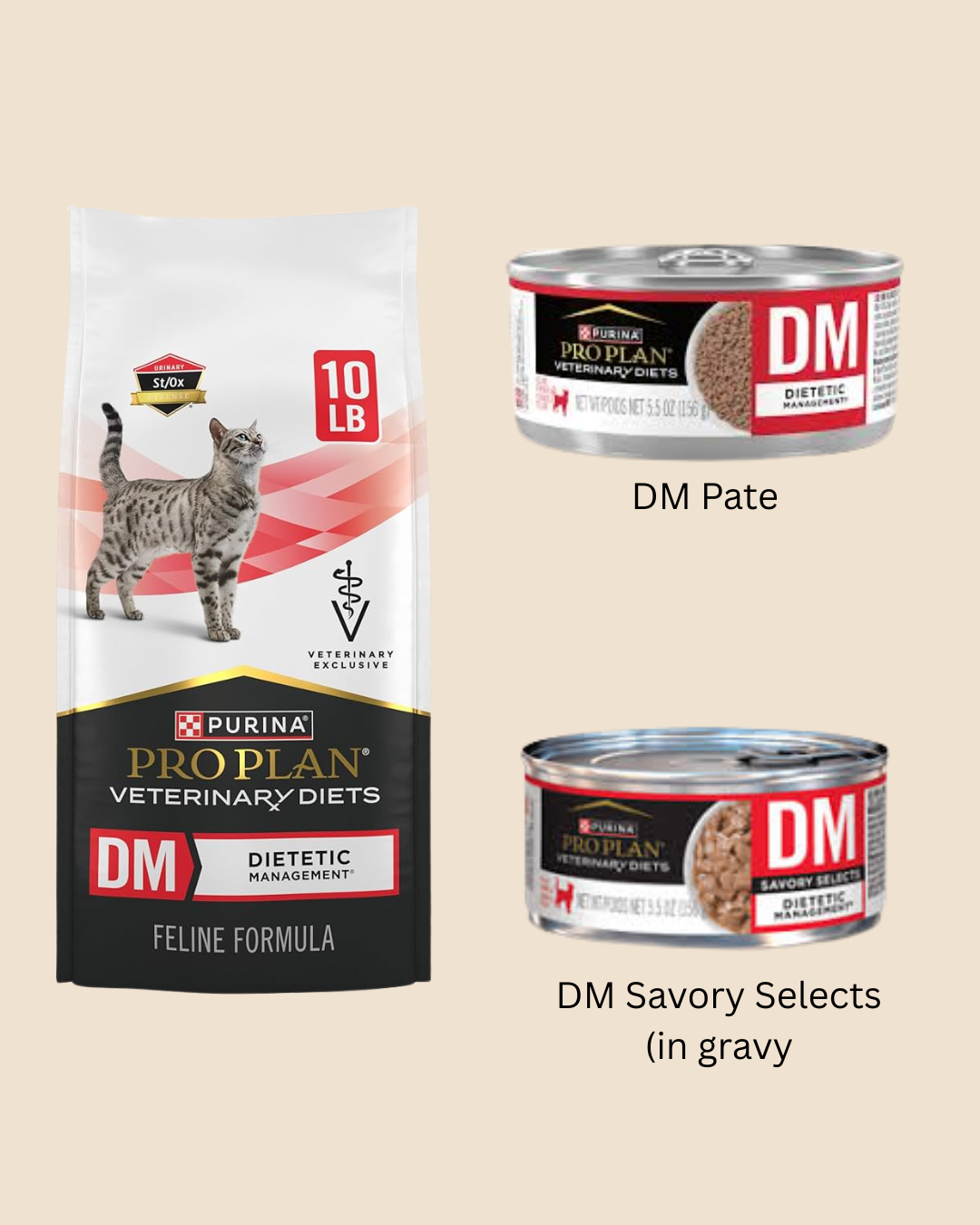
Yes! There are recommended veterinarian diets for your pets!
- Dog – Purina EN fibre balance and Purina OM (especially if your dog is overweight) are our two most recommended diets.
- Cat – Purina DM (diabetic management) canned food is most recommended, as this is scientifically made specifically for diabetes management.
An all-canned food diet is the best choice, however there is also a kibble option for those cats who have special preferences (as most cats do)
- The DM diet comes in a pate, gravy and kibble form. Which can range in cost between $3.52/can to our largest bag (4.54kg) for $98.
- *Prices listed do not include tax and are subject to change – price as of December 2025
- We know that this can be costly, so if these are not an option there are other wet foods we can suggest.
*Contact your veterinarian before changing any food, as there are specific requirements for what your pet needs*
*IMPORTANT NOTE*
*Always provide access to plenty of water!*
What other costs should we plan for?
Any active infections you pet is suffering from will need to be treated. Pet with infections have irregular blood glucose levels and are difficult to treat.
Common infections include urinary tract infections, skin infections and infections due to dental disease.
Your veterinarian will give an estimated cost to address any infections and/or dental disease as necessary
ADDITIONAL LINKS:
Diabetes Mellitus: Introduction
Diabetic Cat Diet
Diabetic Ketoacidosis in Dogs and Cats
| 
 Processing ....
 veterinarian rechecks until the original symptoms are gone.